🧮 How to Calculate Asphalt Tonnage & Volume
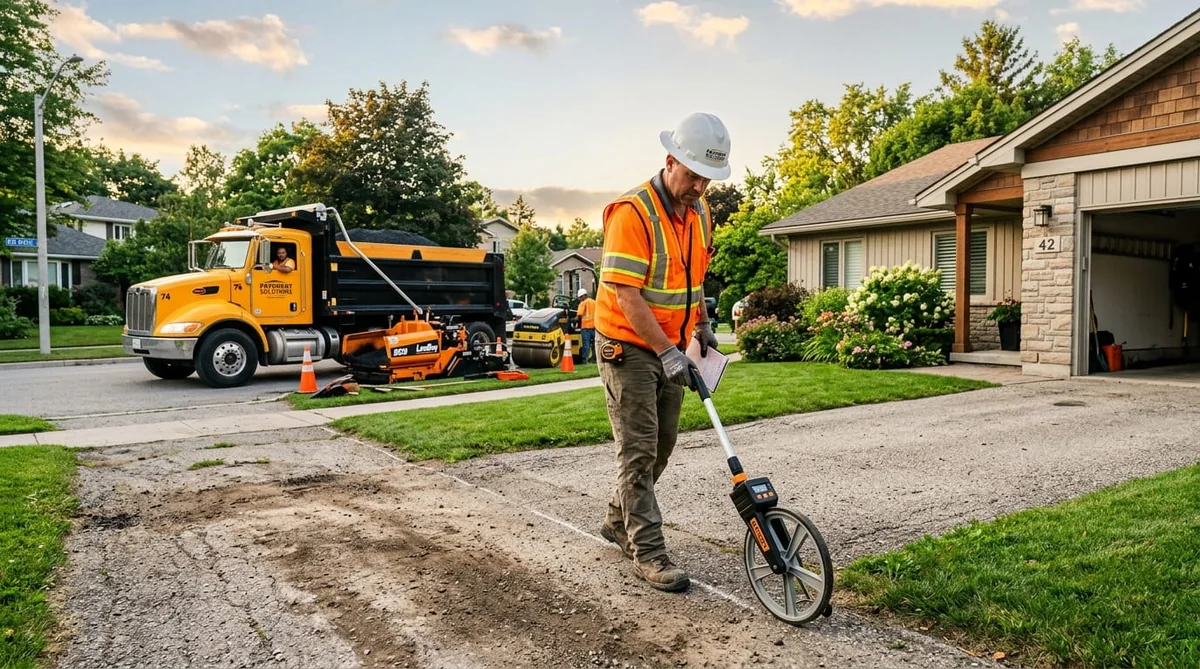
When planning any driveway, roadway, or parking lot paving project, the primary challenge is determining exact material quantities. Using an accurate asphalt tonnage calculator prevents expensive material shortfalls or overspending on excess hot-mix asphalt (HMA).
Standard dense-graded hot mix asphalt weighs approximately 145 pounds per cubic foot (or 2.025 US tons per cubic yard). To calculate total tonnage manually:
Tons of Asphalt = [ Area (sq ft) × Depth (inches) / 12 ] × 145 lbs/cu ft / 2,000 lbs
Simplified Shortcut: Tons = Area (sq ft) × Depth (inches) / 160
For example, a standard 20 ft × 50 ft residential driveway (1,000 sq ft) paved at a 2-inch compacted depth requires:
1,000 sq ft × 2 in / 160 = 12.5 US Tons of Asphalt.
Need step-by-step guidance for non-standard driveway shapes, circular turnarounds, or waste allowances? Read our full guide on How Much Asphalt Do I Need for a Driveway?.
💲 Estimating Asphalt Driveway & Paving Costs
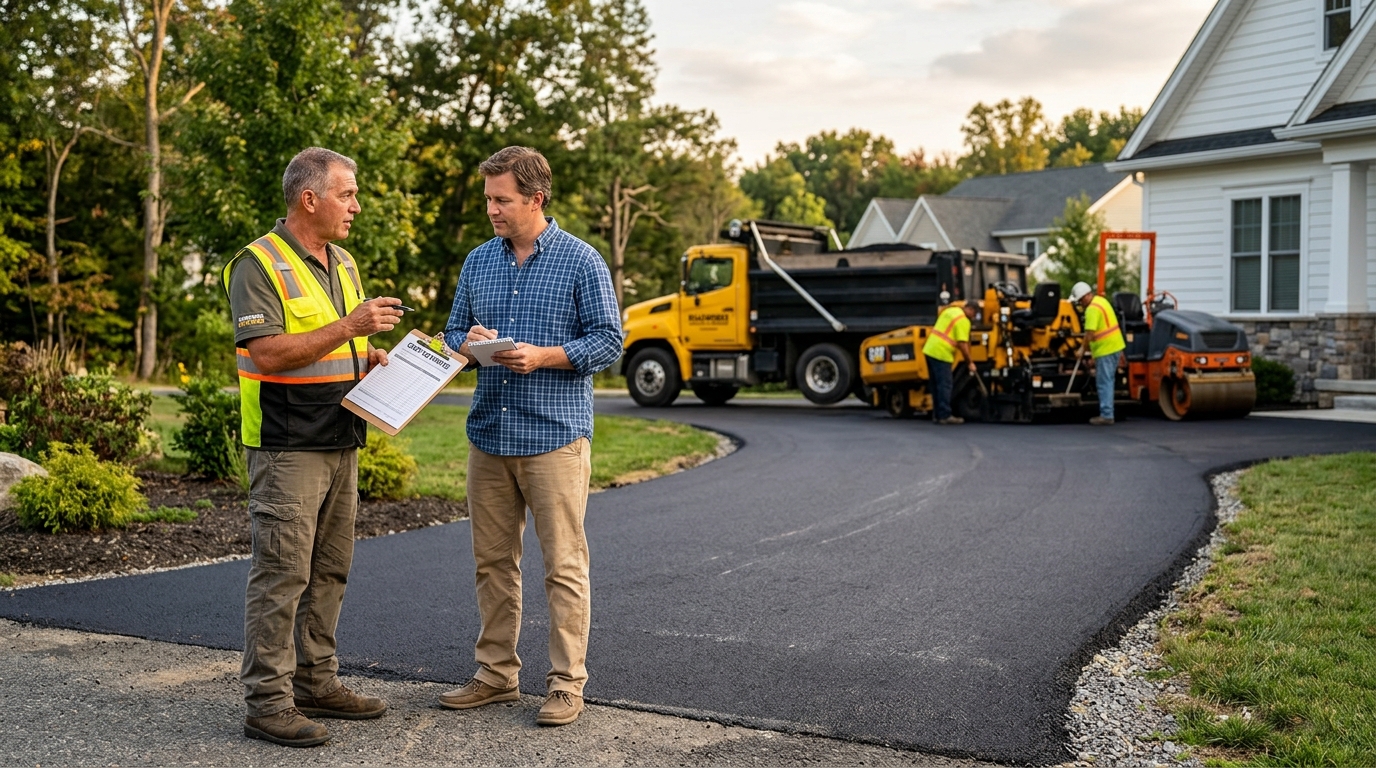
The cost of asphalt paving varies based on geographic location, asphalt plant mix availability, sub-base condition, and required equipment. On average, residential driveway paving costs between $3.00 and $5.00 per square foot for materials and professional installation.
Raw material pricing at the asphalt batch plant typically ranges from $100 to $180 per ton depending on crude oil prices and regional aggregate supply. When estimating total job cost, remember to account for:
- Crushed Aggregate Base Layer: 4 to 6 inches of compacted stone base ($1.50 – $2.50 per sq ft).
- Excavation & Grading: Clearing existing dirt or damaged asphalt ($1.00 – $3.00 per sq ft).
- Compaction & Heavy Machinery: Heavy dual-drum vibratory rollers ensure structural longevity.
- Delivery Logistics: Standard tri-axle dump trucks haul approximately 18 to 22 tons per load.
For comprehensive cost tables, labor estimates, and pricing breakdowns by size, check our Asphalt Driveway Cost Calculator & 2026 Price Guide.
🏢 Commercial Parking Lot Paving & Tonnage Calculations
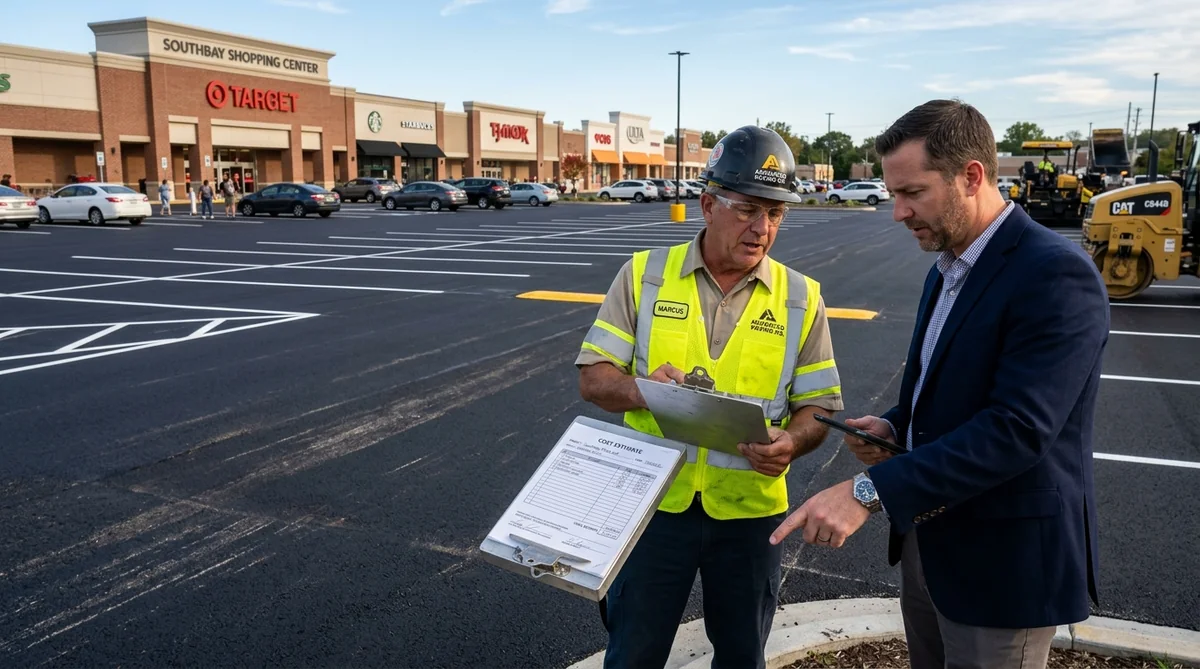
Commercial properties, retail centers, and industrial facilities demand thicker pavement sections to handle heavy delivery trucks and continuous vehicular traffic. Standard commercial parking lots typically feature a 3-inch to 4-inch asphalt pavement structure applied in two layers: a coarse binder course followed by a dense wearing course.
For large-scale commercial paving, estimating material tonnage and delivery cycles is vital to prevent cold joints during laydown:
| Thickness (Inches) |
Sq Ft Coverage / Ton |
Recommended Project Type |
| 1.5 Inches |
110 - 115 sq ft |
Light walkways, tennis courts, asphalt overlays |
| 2.0 Inches |
80 - 85 sq ft |
Standard residential driveways & light parking |
| 3.0 Inches |
53 - 57 sq ft |
Commercial parking lots & delivery driveways |
| 4.0 Inches |
40 - 42 sq ft |
Heavy truck loading docks, highways, industrial yards |
Calculate commercial project budgets, milling costs, catch basin repairs, and line striping expenses with our Asphalt Parking Lot Cost Calculator & Commercial Guide.